Electric vehicles have improved dramatically over the past decade, but battery technology remains the biggest factor limiting range, charging speed, and affordability. In 2026, solid-state batteries are emerging as one of the most promising technologies that could transform the future of electric transportation.
Unlike traditional lithium-ion batteries used in most EVs today, solid-state batteries replace liquid electrolytes with solid materials. This change could allow manufacturers to create batteries that are safer, lighter, more powerful, and capable of storing more energy.
What Are Solid-State Batteries?
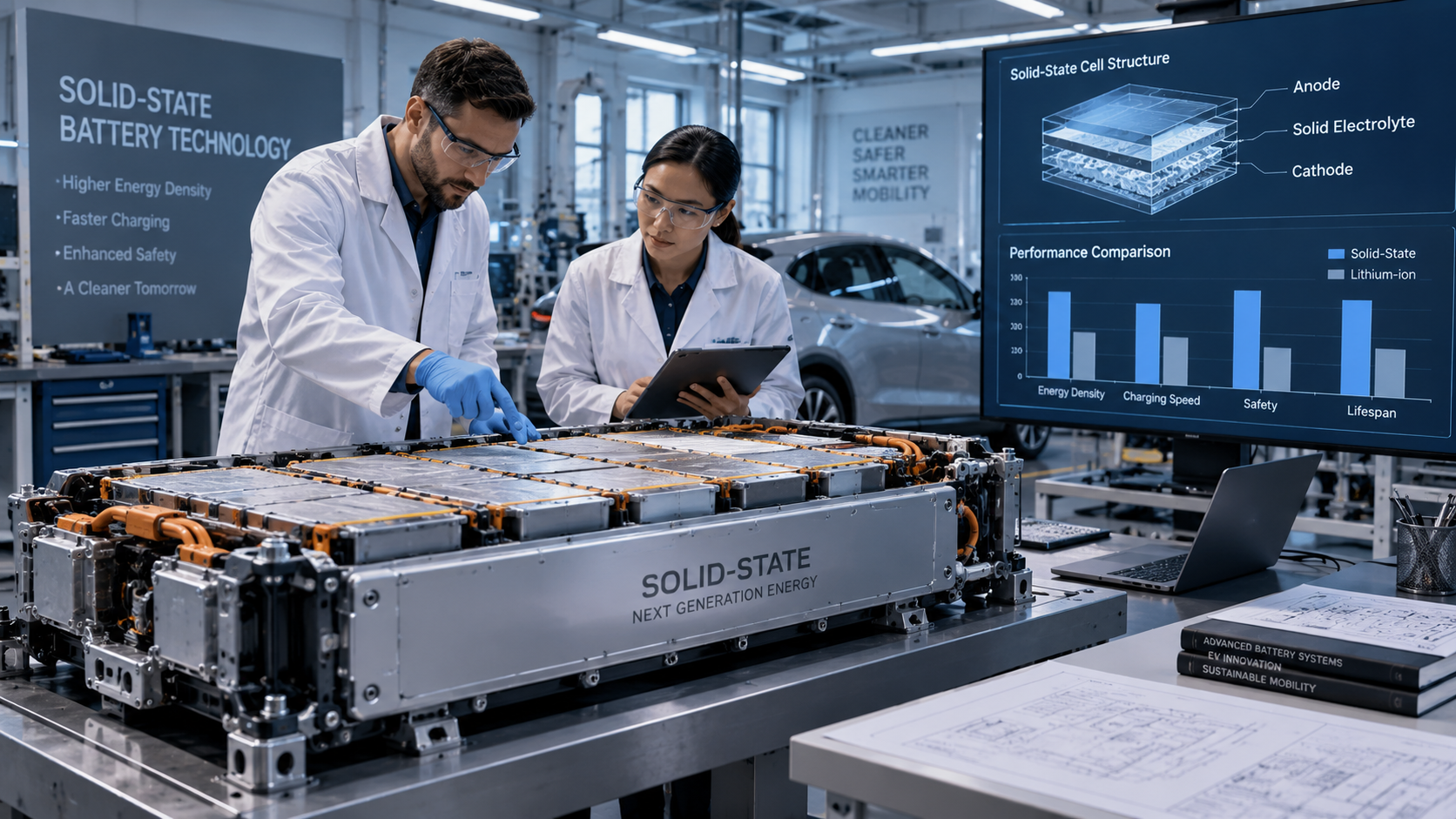
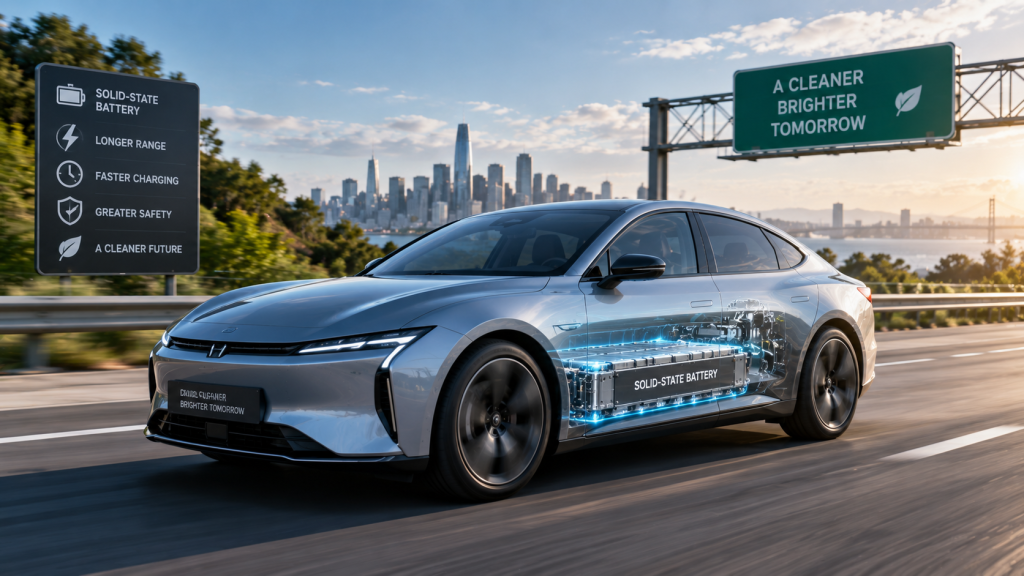
A solid-state battery is an advanced battery design that uses a solid electrolyte instead of the liquid electrolyte found in conventional lithium-ion batteries.
The electrolyte is the material that allows electrical energy to move between the battery’s positive and negative electrodes. By replacing liquid components with solid materials, engineers can improve battery stability and energy density.
According to the U.S. Department of Energy, advanced battery research is a key priority for improving electric transportation and reducing dependence on traditional fuels.
Why Solid-State Batteries Matter for EVs
Current electric vehicles have made significant progress, but many drivers still have concerns about charging time, driving range, and battery lifespan.
Solid-state batteries could address several of these challenges.
Longer Driving Range
One of the biggest advantages of solid-state batteries is higher energy density. This means a battery can store more energy without becoming larger or heavier.
Future EVs equipped with solid-state batteries may travel significantly farther on a single charge compared with current lithium-ion systems.
Faster Charging Speeds
Charging time remains one of the biggest differences between electric vehicles and gasoline vehicles. Solid-state technology may allow EVs to accept higher charging power while reducing heat-related limitations.
This could make long-distance EV travel more convenient and reduce waiting times at charging stations.
Improved Safety
Traditional lithium-ion batteries use liquid materials that require advanced safety systems to prevent overheating. Solid-state batteries reduce some of these risks because solid electrolytes are less likely to leak or catch fire.
Which Companies Are Developing Solid-State Batteries?
Several major automotive manufacturers and battery companies are investing heavily in solid-state battery research.
Toyota has been one of the most active companies developing solid-state battery technology and has announced plans to introduce the technology in future electric vehicles.
Other companies including Volkswagen-backed QuantumScape, Nissan, BMW, and Hyundai are also researching solid-state solutions.
According to Bloomberg, battery innovation has become a major competitive area among global automakers as companies race to improve EV performance.
How Solid-State Batteries Compare With Lithium-Ion
Lithium-ion batteries remain the standard technology for today’s electric vehicles because they are proven, reliable, and increasingly affordable. However, solid-state batteries could provide important improvements.
- Higher energy density
- Potentially longer battery lifespan
- Improved safety characteristics
- Faster charging capability
- Reduced battery weight
However, solid-state batteries are still expensive to manufacture. Producing them at large scale remains one of the biggest challenges before they become common in affordable EV models.
The Manufacturing Challenge
While laboratory testing has shown impressive results, moving from small prototypes to millions of production vehicles is difficult.
Automakers must solve several problems, including:
- Reducing manufacturing costs
- Improving long-term durability
- Creating reliable production processes
- Scaling battery production worldwide
Battery manufacturers must also build new factories and supply chains designed specifically for solid-state technology.
How Solid-State Batteries Could Change EV Ownership
If solid-state batteries become widely available, they could change how consumers think about electric vehicles.
Drivers may no longer need to choose between affordability and range. Smaller battery packs could provide the same driving distance as today’s larger lithium-ion systems.
This could also reduce vehicle weight, improve efficiency, and create new designs for future electric cars.
For readers following EV comparisons, our previous article: EV vs Hybrid vs ICE: Which Fuel Type Wins? explains how battery improvements continue changing the automotive market.
Solid-State Batteries and the Future of Charging Infrastructure
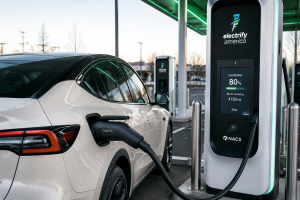
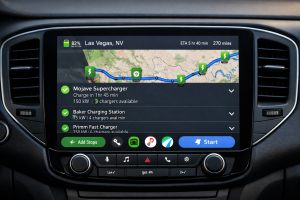
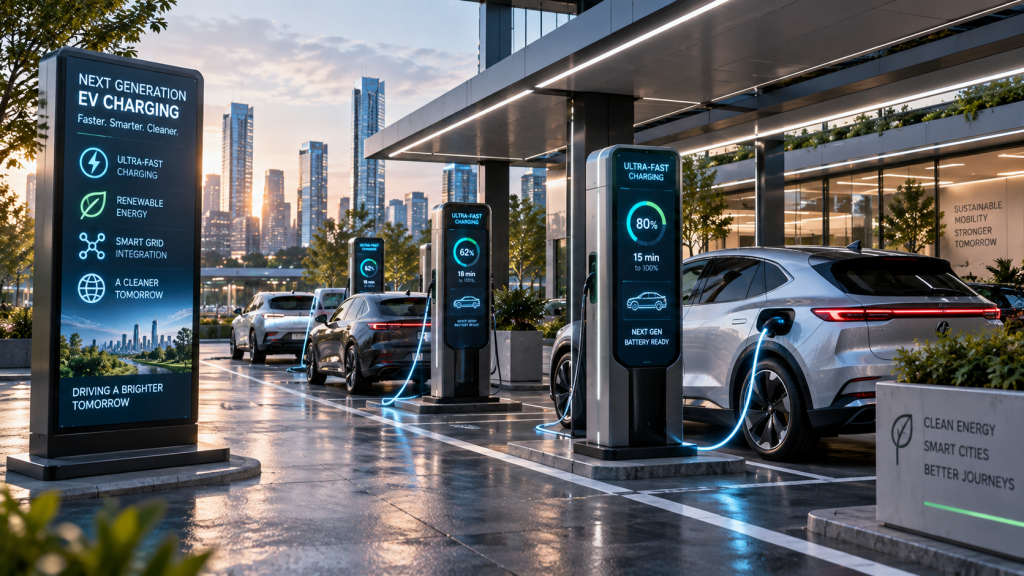
Better batteries will also influence charging networks. Faster charging capability could require improvements in charging stations, electrical systems, and energy management.
Companies developing EV charging solutions are already preparing for higher-power charging demands. Learn more about charging developments in our article: NACS Charging Standard Explained for 2026 EV Drivers.
According to the International Energy Agency, battery innovation will play a major role in global EV adoption and transportation electrification.
When Will Solid-State Batteries Become Common?
Experts expect solid-state batteries to appear first in premium vehicles before becoming available in more affordable EVs.
Early adoption will likely focus on luxury models and high-performance electric vehicles because manufacturers can justify higher production costs.
As manufacturing improves, prices may decrease and the technology could eventually become standard across the EV market.
Conclusion
Solid-state batteries represent one of the most important developments in the future of electric vehicles. While challenges remain, this technology has the potential to deliver longer range, faster charging, and safer batteries.
As automakers continue investing in next-generation battery technology, solid-state batteries could become the foundation of the next era of electric transportation.
Stay updated with C-A-R Blog for the latest EV innovations, automotive technology trends, and future mobility developments.