Shopping for a secondhand electric vehicle in 2026 involves a question that barely existed in conventional used-car buying: how healthy is the battery? A used EV battery health test can help answer it. Two cars with similar mileage, model years, and asking prices may have noticeably different remaining battery capacity, charging performance, and long-term value.
Battery testing has become especially relevant after independent diagnostics provider AVILOO analyzed more than 500,000 battery checks across 20 popular EV models. Its 2026 battery health research found encouraging durability overall, alongside meaningful differences between individual vehicles. For buyers, the lesson is not that used EV batteries are unreliable. It is that a specific battery deserves a specific inspection.
What Does a Used EV Battery Health Test Measure?
A battery health test estimates how much usable energy the traction battery can store compared with when it was new. This is usually expressed as state of health (SoH). If a battery originally offered 70 kilowatt-hours of usable capacity and now offers approximately 63, its estimated SoH is 90%.
That measurement should not be confused with state of charge (SoC), which describes how full the battery is right now. An aging battery can show 100% charge while holding less energy than it did when new.
Depending on the vehicle and diagnostic method, a report may also assess cell-voltage differences, battery management system readings, faults, and indicators of charging or temperature-related stress. The AVILOO battery certificate, for example, provides an independently calculated SoH figure and checks available battery-system data for abnormalities. A report is a snapshot of current condition, not a guarantee of future battery life.
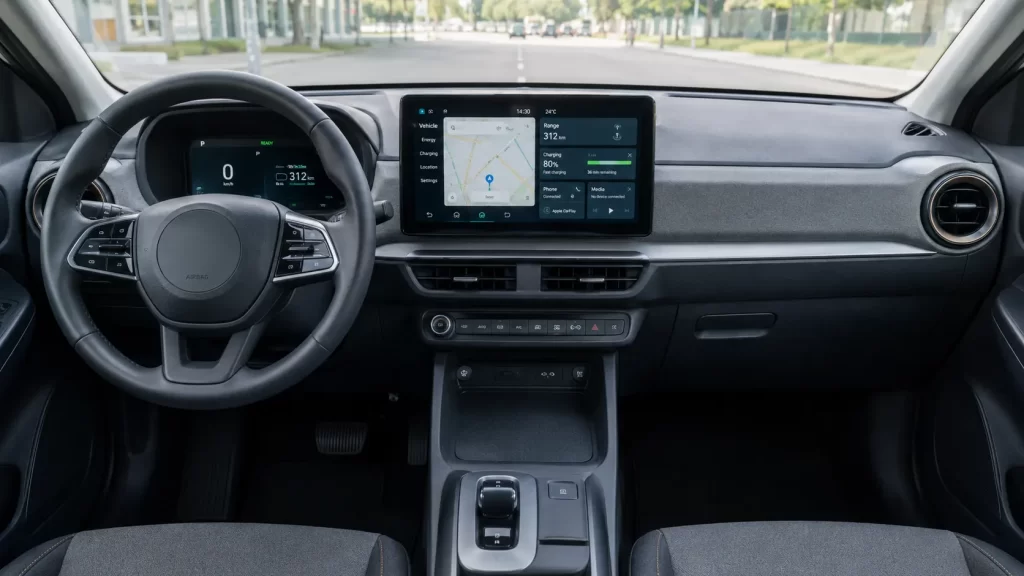
What the Latest 2026 Battery Research Reveals
The large AVILOO study compared median battery health at 50,000, 100,000, and 150,000 kilometers, or roughly 31,000, 62,000, and 93,000 miles. Many models retained substantial usable capacity at the highest mileage milestone. The research also showed that individual cars of the same model can differ by more than ten percentage points in battery health.
Separately, a January 2026 Geotab analysis of more than 22,700 EVs reported average battery degradation of 2.3% annually in its dataset. It found that frequent high-power DC fast charging and hotter operating conditions were associated with faster deterioration. These are fleet-level observations, not a prediction for every car.
The results support a balanced view: many electric-car batteries age well, but neither reassuring averages nor low mileage can replace checking the vehicle you intend to buy.
How to Check an EV Battery Before Buying
1. Request a Battery Health Certificate
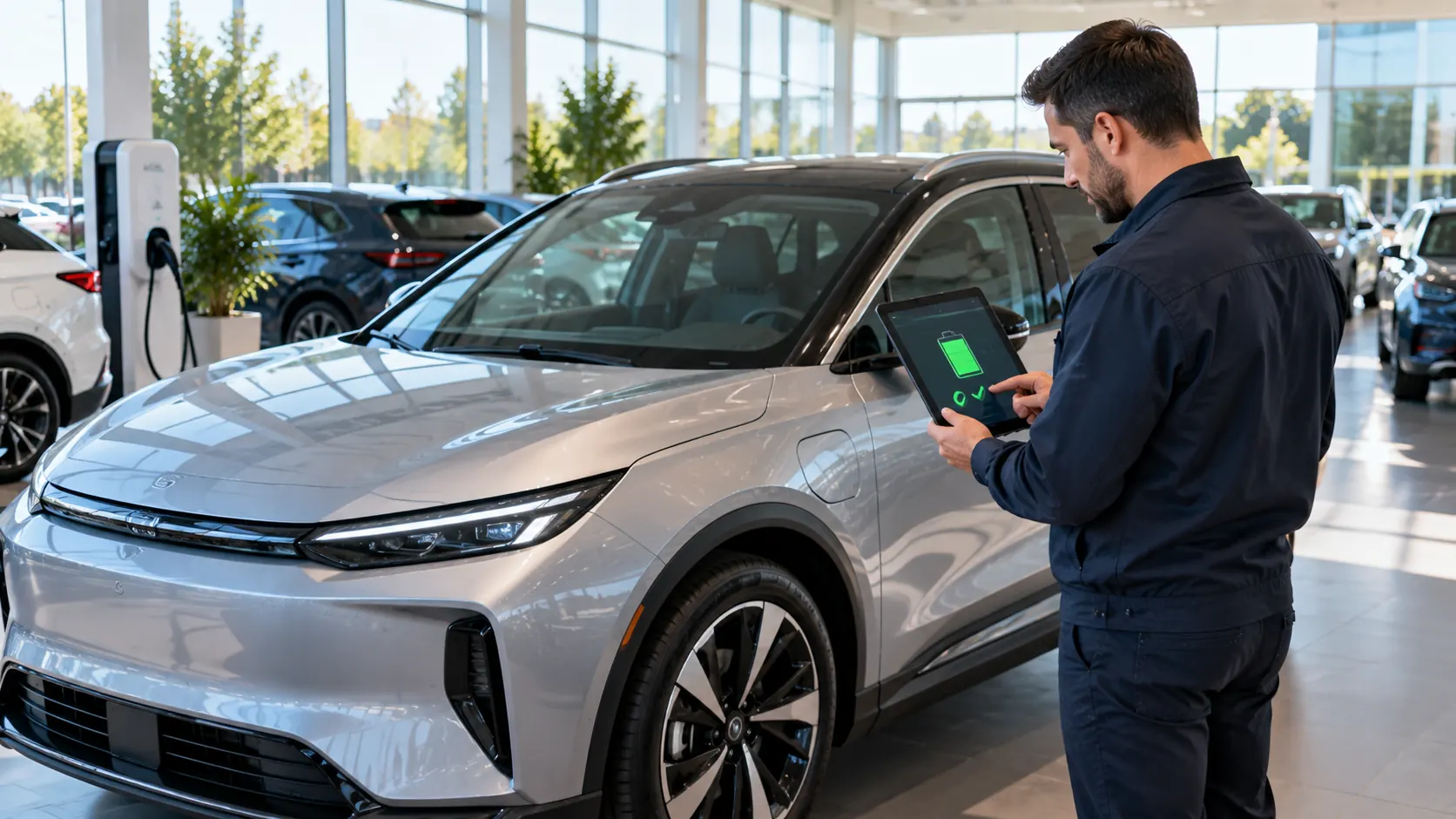
Ask the seller for a recent diagnostic report that identifies the vehicle, date, test provider, SoH result, and any warnings. Prefer testing that compares the vehicle with similar examples and explains its measurement method. Confirm that the VIN matches the car, and check whether the report can be authenticated.
If no independent test is available, ask whether the manufacturer or a qualified EV specialist can perform a battery assessment. An unverified dashboard screenshot should not carry the same weight as documented testing.
2. Check Charging Performance and Battery Warnings
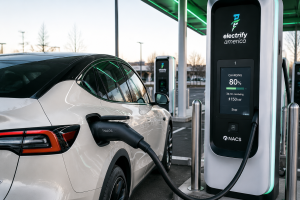
Have a qualified technician scan the vehicle for battery-related fault codes and review available service records. During an appropriate charging session, look for unexpected interruptions, persistent fault messages, or behavior the manufacturer considers abnormal. Charging speed naturally changes with battery temperature and charge level, so one slow session is not proof of damage.
3. Evaluate Real-World Range on a Test Drive
Battery capacity affects range, but so do speed, weather, tire pressure, hills, climate control, and driving habits. Compare the vehicle’s range estimates with manufacturer specifications and credible owner data while accounting for these variables. The 2026 Recurrent EV report emphasizes that observed range retention and measured battery capacity are related but different metrics.
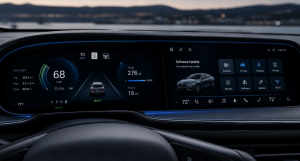
On a practical test drive, assess the dashboard, energy consumption, regeneration, and any warnings. A single short drive cannot establish exact SoH, but it can reveal drivability issues that need further evaluation.
What Is a Good Battery Health Percentage?
There is no universal SoH cutoff that makes every used EV a good or bad purchase. A figure in the mid-90s may be encouraging for a relatively young vehicle, while a lower result may still suit a low-cost commuter with modest daily mileage. Battery size, original range, climate, price, warranty coverage, and your charging access all matter.
Rather than setting one rigid threshold, compare the test result with similar vehicles of the same model, battery size, age, and mileage. Ask how much realistic driving range the remaining capacity supports. A car with a smaller original battery could become inconvenient sooner than a long-range model with an identical SoH percentage.
Also consider the underlying technology. Our guide to solid-state EV batteries explains why battery chemistry and design remain important to the future of electric cars.
Battery Warranty: What Buyers Should Verify
Many manufacturers offer EV traction-battery warranties around eight years or 100,000 miles, but exact terms differ. The U.S. Department of Energy’s EV maintenance guidance recommends checking battery life and coverage with the dealer.
Read the actual warranty booklet and confirm the original in-service date, remaining mileage allowance, transfer rules, exclusions, and capacity-retention threshold if one applies. A warranty against manufacturing defects does not necessarily cover all ordinary capacity loss. Ask whether prior repairs, salvage history, or imported-vehicle status affect eligibility.
A credible used EV evaluation also considers total ownership cost. As discussed in our affordable electric cars guide, a manageable purchase price is only part of the equation; reliable charging and predictable maintenance matter, too.
Other Red Flags Beyond Battery Capacity
High SoH does not mean the entire vehicle is problem-free. Investigate collision or flood history, charging-port damage, underbody impact, cooling-system problems, abnormal error messages, and missing service documentation. Avoid touching orange high-voltage components or attempting to open a battery enclosure yourself.
The Federal Trade Commission’s used-car buying advice recommends a vehicle history report and an independent inspection even when a dealer calls a car certified. You can also search the NHTSA recall database using the vehicle identification number.
Charging compatibility deserves attention as well. Confirm which connector the vehicle uses, whether approved adapters are necessary, and which charging networks actually support it. For North American drivers, our NACS charging standard guide explains the ongoing connector transition.
Used EV Buying Checklist for 2026
- Verify identity: Match the battery report, VIN, model, and battery version.
- Compare SoH: Evaluate the result against similar used EVs, not an arbitrary universal score.
- Read the warranty: Confirm remaining coverage and whether it transfers.
- Inspect the car: Arrange an independent inspection by a professional familiar with high-voltage EV systems.
- Check recalls and history: Review accident, flood, title, and service records.
- Test charging: Confirm the correct connector, charging operation, and access near home or work.
- Budget realistically: Consider tires, insurance, home-charger installation, and any needed repairs.
Should You Buy a Used EV in 2026?
A secondhand EV can deliver quiet performance, low routine maintenance, and attractive value without the price of a new model. Recent market research from Recurrent’s fourth-quarter 2026 report also shows a broader used-EV selection as previously leased vehicles reach resale lots.
Still, the best choice is not necessarily the lowest-mileage or cheapest listing. The strongest purchase combines an appropriately priced car, a documented battery assessment, acceptable remaining range, workable charging options, and a clear service history. For a broader ownership comparison, see our EV vs. hybrid vs. gasoline vehicle guide.
Final Thoughts
Used EV battery health testing is becoming an important part of buying with confidence in 2026. Large studies suggest many electric-car batteries retain useful capacity after substantial mileage, but the condition of one individual vehicle cannot be read from industry averages. Ask for a trustworthy test, verify the warranty, investigate the vehicle’s history, and make sure its usable range matches your actual driving needs. A little verification before purchase can make long-term electric-car ownership far more predictable.