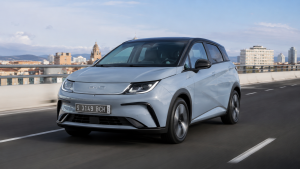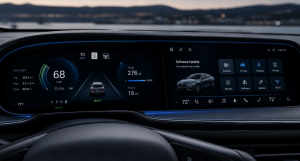
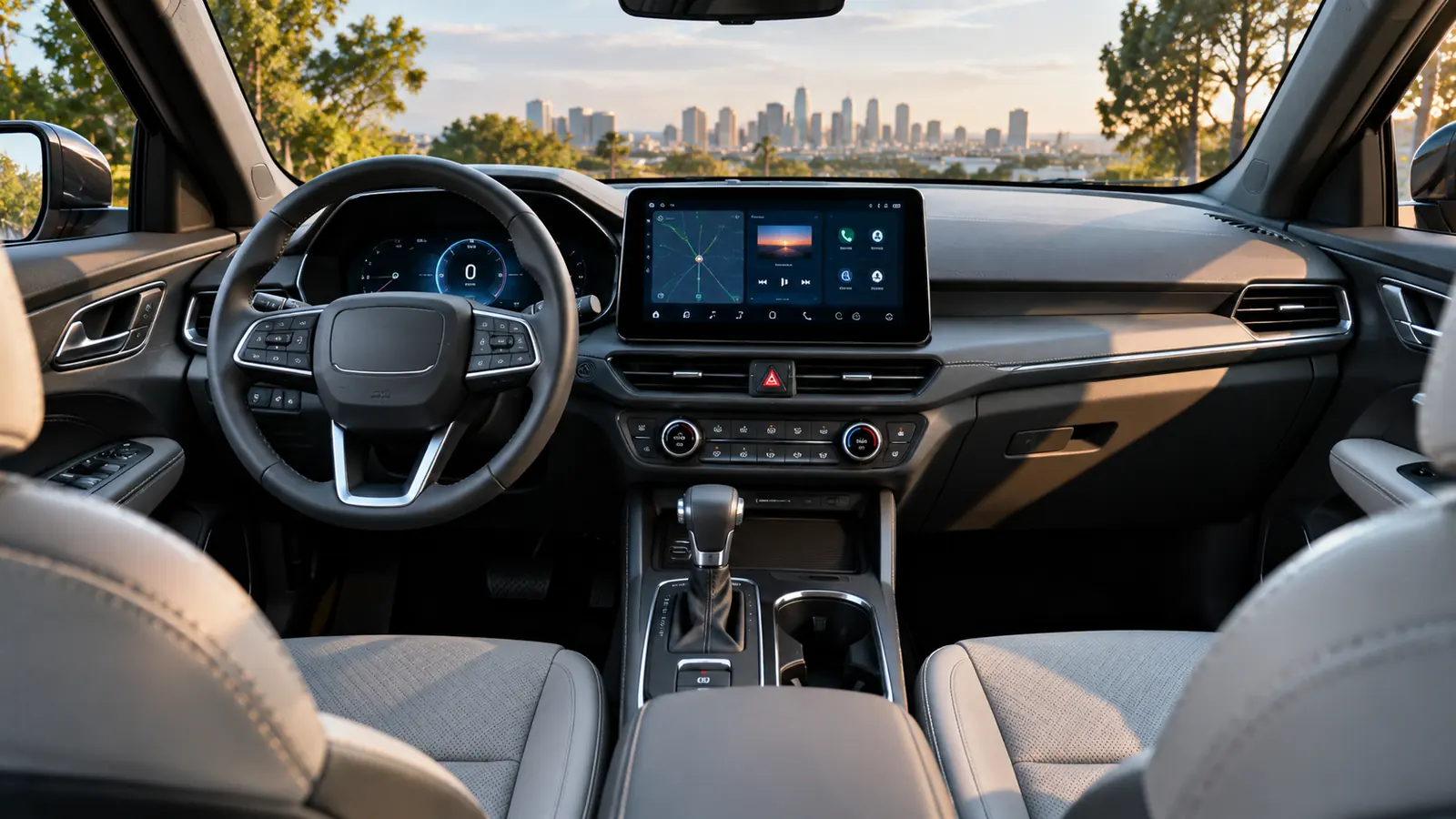
For years, car interiors seemed to follow one rule: replace more switches with bigger screens. Climate settings, seat heaters, mirror adjustments, and even basic driving functions migrated into glossy touch menus. But in 2026, physical buttons in cars are making a comeback, and vehicle safety testing is helping explain why.
On October 12, 2026, Euro NCAP highlighted new models that retain easy-to-reach controls as part of its updated assessment of driver interaction. The change reflects a growing debate about convenience, distraction, and what drivers actually need while moving. For anyone shopping for a new car, the question is no longer simply how large the touchscreen is. It is whether essential functions are easy to operate without looking away from the road.
Why Are Physical Buttons Returning to Cars?
Automakers have embraced touchscreens because one display can manage navigation, audio, smartphone integration, climate settings, and software updates. Screens also create a streamlined interior and make it easier to change an interface through software rather than redesigning hardware.
The drawback appears when drivers must open several menus to find an everyday function. A smooth display offers little tactile guidance, while a distinctive knob or switch can often be located by touch. The latest Euro NCAP announcement on physical driving controls specifically praises straightforward access to essential functions.
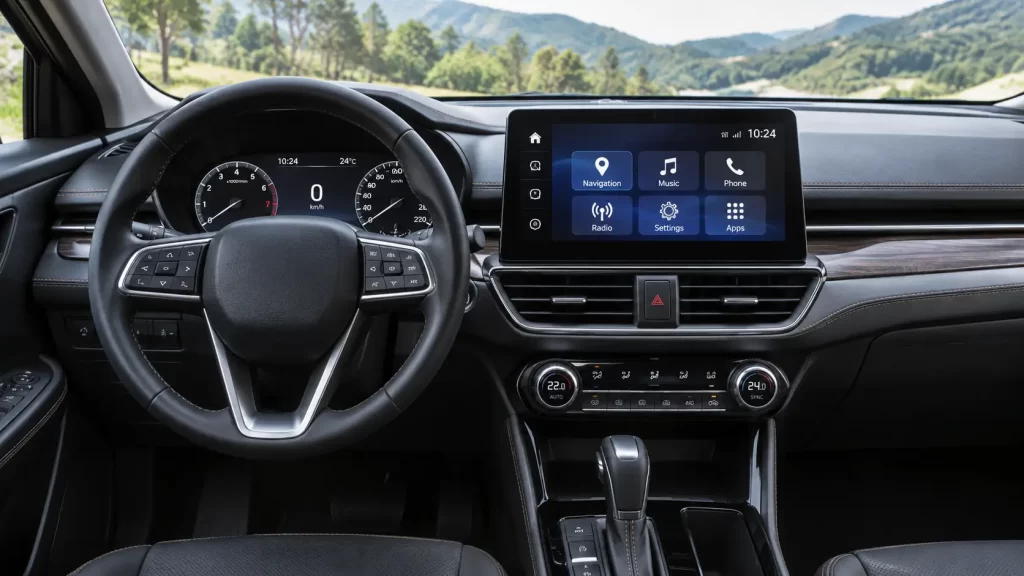
This does not mean screens are disappearing. More likely, manufacturers will keep infotainment displays while restoring dedicated buttons, stalks, and rotary controls for tasks that drivers may need to perform quickly.
What Changed in Euro NCAP’s 2026 Safety Tests?
Euro NCAP is an independent European vehicle safety assessment program, not a government agency imposing a blanket ban on touchscreen controls. Its revised 2026 ratings introduce more detailed evaluation of how drivers interact with their cars. The organization describes four broad assessment stages: Safe Driving, Crash Avoidance, Crash Protection, and Post-Crash Safety.
Under the Safe Driving assessment, evaluators examine whether key controls are placed clearly and can be operated through direct physical inputs. The October results specifically identified indicators, windshield wipers and washers, hazard warning lights, the horn, and the emergency-call button as important functions.
The official 2026 protocol announcement explains that interface design is now part of evaluating safer everyday driving. This encourages manufacturers to make basic functions intuitive without declaring that every vehicle using a touchscreen is unsafe.
Which 2026 Cars Illustrate the Change?
Euro NCAP’s October assessment used the Audi Q7, Kia EV2, and XPENG X9 to illustrate different approaches. It reported that the Audi Q7 earned 100% for essential driving tasks within the driving-controls assessment, while the XPENG X9 scored only 20% for primary driving controls because of its touchscreen-centered design.
That comparison should not be mistaken for an overall crash-test verdict: the XPENG X9 still achieved a five-star overall safety rating. The lesson is more specific. A car may perform well in crash avoidance and occupant protection while offering a less convenient way to activate common controls.
As Euro NCAP’s on-road driving guidance explains, ratings now give greater attention to vehicle interfaces and driver monitoring as well as the electronic safety technology itself.
Why Can Touchscreen Controls Be Distracting?
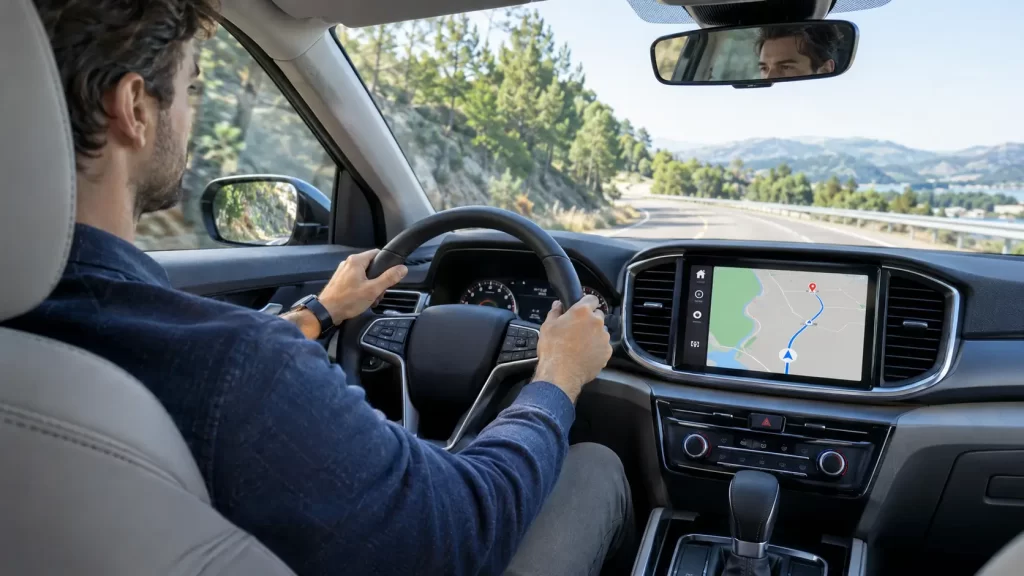
When drivers use a touchscreen, they may need to look down to identify a virtual button, aim their finger, confirm the selection, and sometimes navigate another menu. A physical dial, by comparison, can provide a fixed location and immediate tactile feedback. That difference matters when the road environment changes unexpectedly.
An August 2026 peer-reviewed study comparing touchscreens and physical controls found greater distraction associated with touchscreen operation. For tasks requiring more than one interaction, touchscreen use also produced worse task and driving performance in the study’s conditions.
Earlier AAA Foundation research on infotainment systems likewise examined the visual and mental demands of built-in systems, Apple CarPlay, and Android Auto. These findings do not prove that every dial is safer in every situation, but they reinforce the value of simpler interfaces.
Which Vehicle Functions Benefit Most From Real Buttons?
Not every feature requires its own switch. A sensible design gives priority to functions that are frequently used, time-sensitive, or important in poor driving conditions:
- Hazard lights: An obvious, dedicated switch is easier to locate in a stressful moment.
- Turn signals and wipers: Familiar stalks or switches offer predictable operation.
- Front and rear defoggers: Direct access helps when visibility changes suddenly.
- Climate temperature and fan speed: Knobs or buttons can simplify regular adjustments.
- Volume controls: A physical dial or steering-wheel button can be easier than tapping a slider.
Meanwhile, large touchscreens remain useful for navigation maps, detailed vehicle settings, charging schedules, and entertainment menus that do not need constant adjustment while driving.
Are Big Touchscreens Still Worth Having?
Yes, when they are designed around the driver rather than being used as a replacement for every control. A wide, clear display can make navigation easier to follow and present helpful vehicle information. The problem is not the existence of a screen; it is the demand placed on a driver to complete a basic action.
Modern software also enables new functions after a vehicle leaves the factory. Our article about software-defined vehicles explains why manufacturers increasingly use updates to improve in-car systems. Good interface design should make those new features accessible without burying essential controls.
How Does This Connect to Distracted-Driving Safety?
The National Highway Traffic Safety Administration defines distraction broadly. It includes activities that divert a driver’s visual, manual, or cognitive attention, including operating entertainment and navigation systems. Even a familiar dashboard feature can become distracting if it requires too much attention.
That is why the physical-buttons debate belongs alongside other vehicle safety advances. The Insurance Institute for Highway Safety’s 2026 awards place additional emphasis on crash avoidance and protecting occupants. Those technologies matter, but they do not eliminate the need for driver attention.
Older motorists may notice interface complexity differently, too. AAA research on older drivers and infotainment systems found greater time demands during common in-car tasks. Intuitive controls can benefit drivers of different ages and experience levels.
What Car Buyers Should Test in a Showroom
Before deciding that an impressive dashboard is the right one, sit in the driver’s seat and try the controls with the car parked. Locate the hazard switch, operate the wipers, adjust the temperature, change audio volume, and see how easily you can dismiss an unwanted alert.
Ask yourself whether the important controls remain visible in bright sunlight, whether the screen responds accurately, and whether you can find commonly used functions without digging through multiple pages. A short supervised test drive may then show how the interface feels in normal traffic.
If you use smartphone navigation regularly, compare the built-in interface with the features described in our Android Auto EV trip planning guide. Useful navigation tools should complement safe driving, not become another source of unnecessary interaction.
Will 2027 Cars Have More Buttons?
Euro NCAP’s revised scoring gives automakers a clear reason to reconsider touchscreen-only designs. Consumer feedback and research provide additional pressure, although the actual response will differ across brands and markets. Some vehicles may return to traditional stalks and knobs; others may use a hybrid setup with a display and a small number of prominent physical controls.
The shift also fits the wider evolution of automotive technology. As our guide to emerging auto-tech innovations discusses, more capability is not necessarily better unless the technology works naturally for the person behind the wheel.
Final Thoughts
The return of physical buttons in cars is not a rejection of modern technology. It is a reminder that safer design often means making essential tasks simple, predictable, and easy to perform. Euro NCAP’s 2026 approach, together with recent research, is encouraging manufacturers to reconsider how much attention a touchscreen should demand.
When comparing new cars, look beyond screen size and visual polish. The strongest dashboard may be one that gives you the best of both worlds: digital convenience for complex features and dependable physical controls for the everyday tasks that matter most.